Ceramics
Ceramics
There are two types of ceramic cookware.
First is 100% ceramic cookware, which is made from naturally occurring minerals such as clay and quartz sand. These are kiln baked and specially glazed.
Second, there is ceramic-coated cookware, which is what I’ll be talking about in this article.
Ceramic-coated cookware has a metal core (usually aluminum) and a ceramic-coated non-stick cooking surface made from natural sand-derived silicon
Even though the coating is technically not ceramic, it has been labeled ceramic due to its slick, glossy texture and appearance.
Ceramic-coated cookware is touted as a toxin-free alternative to traditional non-stick options because it doesn’t contain PFOA, PFAS, PTFE, lead, or cadmium.
Also, unlike traditional non-stick pans coated with PTFE (Teflon), there is no risk of releasing harmful fumes if ceramic cookware is overheated.
The Pros of Ceramic Cookware
Ceramic cookware has its advantages and disadvantages, but let’s start with the good stuff. Below are the top reasons people buy ceramic cookware.
Pro: Non-Toxic
Ceramic cookware gained popularity just as Teflon was becoming infamous for its use of PFOA during manufacturing. Experts praised ceramic cookware, labeling it a safer and more eco-friendly alternative to traditional Teflon-coated non-stick pans.
Although all manufacturers stopped using PFOA in 2013, there are still concerns around Teflon-coated non-stick pans due to the fumes they release when heated over 500 degrees Fahrenheit.
The materials used to manufacture ceramic coating are derived from natural sand and don’t contain lead, cadmium, or other potentially dangerous chemicals.
So, despite the ongoing debate over the safety of Teflon-coated pans (Google “Are Teflon pans safe?” and you’ll find dozens of conflicting reports), there are few safety concerns with ceramic-coated pans.
Pro: Eco-Friendly
Many brands claim that their ceramic cookware construction is more eco-friendly than the process of making Teflon cookware. For example, Caraway and GreenPan say their production practices release 60% less CO2 than traditional non-stick cookware.
I’m yet to see scientific evidence backing up these claims, so you’ll have to take these manufacturers’ word for it.
Pro: Food Doesn’t Stick
Ceramic cookware is naturally non-stick. While cooking, you’ll find that food releases quickly and easily.
You won’t have any issues flipping pancakes or sauteing vegetables. It’s the ideal cookware for delicate foods like fish and eggs that can sometimes cling to the surface of other cookware types.
Cleanup is fast; all you need to do is wipe the pan clean with a cloth and soapy water.
Unlike other types of cookware, such as stainless steel, cooking with ceramic is beginner-friendly; it doesn’t require advanced skill or cooking techniques.
Pro: Promotes Healthy Cooking
Ceramic cookware is non-stick, so you don’t need to coat the cooking surface with oil or butter.
Without all the excess grease, you can cook low-fat meals and not worry about bits and pieces of food sticking and staining the surface.
In contrast, stainless steel and cast iron pans require a decent amount of fat to prevent sticking.
Pro: Less Expensive Than Stainless Steel Cookware
In general, ceramic-coated cookware is less expensive than stainless steel.
Of course, prices vary drastically by brand, but if you compare the average ceramic pan to a mid to high-end stainless steel pan, you’ll see that the ceramic one is much more affordable.
Let’s make this more tangible. Below are three ceramic pans and three stainless steel pans of the same size. Click the links next to each pan to compare today’s prices.
Ceramic Coated Cookware:
Cooking Light 9.5-Inch Ceramic Fry Pan (check price on Amazon)
Caraway 10.5-Inch Fry Pan (check price on CarewayHome.com)
GreenLife 12-Inch Ceramic Fry Pan (check price on Amazon)
Stainless Steel Cookware:
Mauviel 9.5-Inch Stainless Steel Fry Pan (check price on Amazon)
All-Clad 10-Inch Stainless Steel Fry Pan (check price on Amazon)
Le Creuset 12-Inch Stainless Steel Fry Pan (check price on Amazon)
Pro: Color Options
With ceramic-coated cookware, you can choose from a variety of color options. Find one to suit your kitchen decor or one that stands out from the crowd. With stainless steel and cast iron, there’s little variation when it comes to color.
With ceramic cookware, you can go for a simple sleek black and gray, like that of the Cuisinart Advantage Ceramic XT set (available on Amazon).
The GreenLife ceramic set comes in nine color options. You can choose from a lovely lavender, blue, burgundy, soft pink, yellow, and a few other options.
Caraway, available on its website, offers ceramic cookware in five colors, including cream, navy, and grey.
Caraway cookware interiorCaraway cookware navy exterior with gray interior
As another option, Ballarini offers ceramic-coated cookware in a speckled design, for something with more of a patterned finish (available on Amazon).
Pro: High-Heat Tolerance
Ceramic cookware can withstand high heat without giving off toxic fumes, unlike traditional non-stick. Conventional non-stick cookware can typically handle up to 500°F before it emits hazardous fumes.
For example, GreenPan pans can handle heats up to 842°F, and Blue Diamond can handle up to 850°F.
Always check the manufacturer’s instructions because some pans have a much lower maximum allowable temperature. For example, GreenLife pans can only handle up to 350°F due to its silicone-wrapped handles.
To be safe, I recommend sticking to medium-high heat with ceramic pans. If it gets too hot, the coating can start to break down, ruining its non-stick coating. If you are looking to sear meat, I recommend using a stainless steel pan or cast iron skillet.
Pro: Non-Reactive to Acidic Foods
With some cookware, such as copper and carbon steel, cooking with acidic ingredients can be a problem. It reacts with the cooking surface and leaches chemicals and metals into the food, which is both hazardous and ruins the taste.
Ceramic cookware is non-reactive with acidic foods such as tomatoes, citrus fruits, and vinegar. With ceramic cookware, you can cook with any ingredient.
Pro: Lightweight
Ceramic-coated cookware is lightweight and easy to maneuver in the kitchen, unlike cast iron.
Below is a table comparing the weight of ceramic-coated cookware and other types of pans.
Ceramic Cookware Weight:
GreenLife 12-Inch Ceramic Fry Pan (view on Amazon): 2.3 pounds
Caraway 10.5-Inch Ceramic Fry Pan (view on CarewayHome.com): 2.8 pounds
Blue Diamond 12-Inch Ceramic Fry Pan (view on Amazon): 3.8 pounds
Other Cookware Weight:
All-Clad D3 12-Inch Stainless Steel Fry Pan (view on Amazon): 4.5 pounds
Anolon Hard Anodized 12 Inch Fry Pan (view on Amazon): 4.1 pounds
Lodge12-Inch Cast Iron Skillet (view on Amazon): 8 pounds
Pro: Easy to Clean
Although ceramic coated cookware isn’t dishwasher safe, it’s still easy to clean. Simply wash with warm water and soap. Food releases easily because of the non-stick surface.
Pro: Low Maintenance
There is no need for complicated seasoning regiments with ceramic cookware, like with cast iron. These products are ready for use after just one wash.
The Cons of Ceramic Cookware
While ceramic cookware has a long list of pros, it comes with several notable downsides. Here’s the not-so-good truth about ceramic cookware.
Con: Loses Its Non-Stick Properties Quicker Than Teflon
The biggest complaint about ceramic-coated cookware is that it performs great at first, but it loses its non-stick properties much sooner than traditional non-stick cookware.
Don’t believe me? Orion Industries, a leading applicator of Teflon coatings for over 50 years states:
“Sol-gel [ceramic] coatings have a better initial release than most conventional PTFE coatings. However, the nonstick property of sol-gel coatings can diminish faster than a conventional PTFE coating. Proper use and care can play a significant role in decreasing the rate of decline.” (Source: Orioncoat.com).
If you want to slow the deterioration of your pan’s non-stick abilities, avoid overheating, cooking with metal utensils, and cleaning in the dishwasher.
Instead, cook on medium heat, use wooden or silicone utensils, and always wash by hand.
Con: Durability
When you buy ceramic cookware, you need to have realistic expectations. It’s not “forever” cookware like stainless steel or cast iron, and it’s less durable than traditional non-stick.
If painted, the exterior surface is likely to chip, especially if it rubs against the rough grates on the stove.
Caraway cookware exterior chip
As I mentioned, the ceramic coating on the cooking surface will break down over time. Once this happens, you have no option but to replace the pan.
You can expect ceramic pans to last two to three years, while a high-quality non-stick pan coated with Teflon can last up to five years.
Ceramic cookware is also susceptible to warping if exposed to drastic temperature changes.
When you consider the fact that you’ll likely need to replace ceramic cookware more often than traditional non-stick, it makes you wonder which one is really more eco-friendly.
Con: More Expensive Than Traditional Non-Stick Pans
While ceramic-coated cookware is generally cheaper than stainless steel, it’s more expensive than Teflon non-stick cookware.
Of course, there are exceptions, but in general, expect to pay a bit more for a ceramic pan.
Below are some examples of both ceramic-coated and Teflon-coated cookware.
Ceramic-Coated Cookware:
GreenPan Paris 8 Inch Ceramic Non-Stick Fry Pan (check price on Amazon)
Caraway 10.5-Inch Ceramic Fry Pan (check price on CarewayHome.com)
Ozeri Professional Series Earth Ceramic 8-Inch Fry Pan (check price on Amazon)
Teflon-Coated Cookware:
OXO Good Grips Non-Stick Open Frypan 8 Inch (check price on Amazon)
Cuisinart 12-Inch Non-Stick Skillet (check price on Amazon)
Rachael Ray 12.5-Inch Non-Stick Frying Pan (check price on Amazon)
Con: Inconsistent Cooking Performance
This may come as a surprise to you, but ceramic cookware doesn’t cook food as evenly as other cookware types.
Why?
Without getting too scientific, the ceramic coating is made up of tiny mineral particles, known as nanoparticles. These particles give ceramic pans their non-stick properties by preventing food from being in complete contact with the cooking surface.
The downside—they also make it difficult to get precise and consistent results. Food can’t cook completely evenly if parts of it aren’t touching the hot surface entirely.
The truth is, the average home cook won’t notice a difference with 95% of meals. But if you’re serious about cooking, you might want to think twice about ceramic cookware for this reason.
Con: Not Dishwasher-Safe
Most quality cookware should be hand washed to promote longevity, and this is the same for ceramic cookware. Putting it in the dishwasher can break down the cooking surface and ruin the pan.
Also — some brands will void the warranty if they discover the cookware has been through the dishwasher. So if you want to toss your cookware in the dishwasher after a long day, ceramic cookware isn’t the option for you.
Con: Not the Best Cookware for Searing Meat
In general, non-stick cookware isn’t the best option for searing meat, and ceramic cookware is no exception.
Stainless steel and cast iron cookware can handle much higher temperatures, and their sticky surfaces actually help with searing because they grip the food, maintaining direct contact until a crust is formed.
So, if you’re cooking burgers, steaks, or other meats and want to get a crispy, golden exterior, don’t use your ceramic pan.
Con: Metal Utensils Will Scratch the Cooking Surface
Ceramic cookware isn’t compatible with metal utensils as the surface is more delicate than other types of cookware. Metal utensils can scratch and scuff the coating, so always use wooden or nylon utensils.
Con: Not All Brands Are Oven-Safe
Not every ceramic cookware brand is oven-safe. Some, like Caraway, is oven-safe up to 550°F. But others aren’t, which can be inconvenient for many recipes.
Exposing ceramic cookware to high temperatures can lead to warping, so always read the fine print and understand the maximum oven-safe temperature before buying.
Con: Some Brands Aren’t Induction-Compatible
If the ceramic cookware’s base is aluminum, it isn’t compatible with induction cooktops since aluminum is not magnetic.
Some ceramic cookware brands, like Caraway, make their pans with stainless steel bases, and stainless steel is magnetic (i.e., induction-compatible).
Caraway cookware exteriorCaraway cookware steel induction plate
If the pan doesn’t have a steel base, you can buy a separate induction disk to place under the pan, but this isn’t ideal.
If you have an induction cooking range, consider this drawback before buying ceramic cookware and do your due diligence to make sure you are buying an option with a stainless steel base.
Con: Relatively New Type of Cookware
Because ceramic cookware is still relatively new, there are not enough studies to prove many of the manufacturer’s claims.
Don't Forget Measuring Equipment!
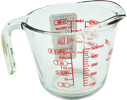 Accurate volume measures are essential to the success of recipes. They also help control portion size and costs.
 Measurements are usually needed for an item’s weight or volume. Weight is the heaviness of a substance, while volume is the space occupied by a substance. To facilitate this, you'll need measuring spoons, measuring cups, and a good kitchen scale.
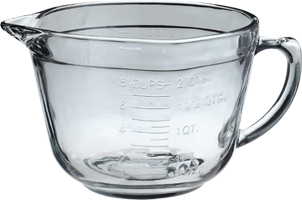
 I have found that a 2 cup pyrex measuring cup and a larger 8 cup "measuring cup", sometimes called a "batter bowl" are both useful.
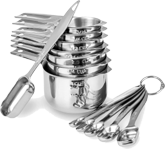
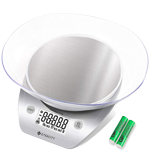
Add to that a good stainless steel measuring cup set and measuring spoon set and you are good to go. A small, full-function digital kitchen scale rounds out the tools to prepare the recipes for everyday life.

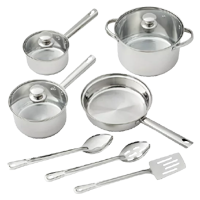 You cookware plays an essential role in the kitchen. All well-equipped kitchens include pots, pans, and baking dishes. These may be made of stainless steel, aluminum, copper, cast iron, or ceramics. Each has it's positive benefits and negative drawbacks.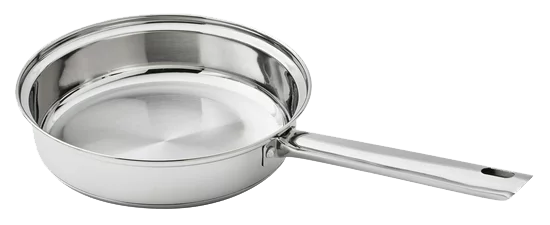
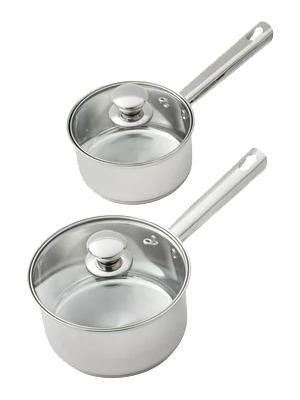
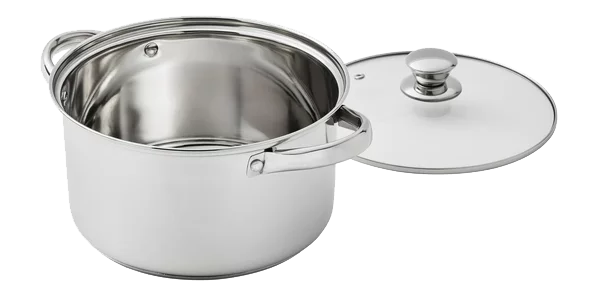
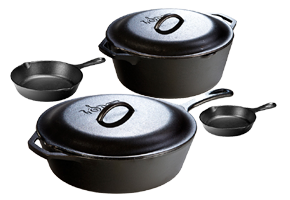 Cast-iron are heavy pans that can withstand high heat. They are useful for frying and sautéing a variety of items when steady, even heat is desired.